The participants concluded the day with engaging brainstorming sessions on four themes: The New Way of Working, Ecodesign, Scaling Up, and Circular Business Models. This article provides a concise overview of the discussions surrounding The New Way of Working.
The participants concluded the day with engaging brainstorming sessions on four themes: The New Way of Working, Ecodesign, Scaling Up, and Circular Business Models. This article provides a concise overview of the discussions surrounding The New Way of Working.
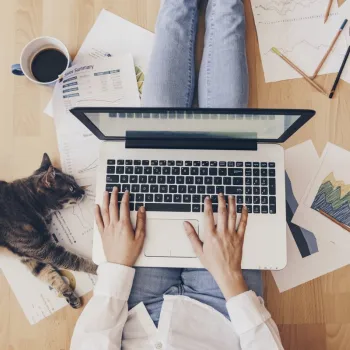
The COVID-19 pandemic propelled hybrid working forward. Many employees now have the opportunity to work part-time in the office and part-time from home if their job allows. As a result, many offices are currently vacant. Moreover, traditional 9-to-5 working hours have been replaced by output-oriented work. These new ways of working have an impact on the layout of offices and home workplaces. Insights were shared in the brainstorming corner of 'The New Way of Working'. Here are some of the findings...
- Every individual is different. Some employees prefer to work from home all the time, while others find it important to keep work and personal life strictly separate and prefer to 'go to the office' every day.
- Each office setup is unique. It should be tailored to the specific needs and culture of each organization. Therefore, it is advisable to thoroughly analyze the way of working before starting the (re)design of your office. Additionally, considerations should be given to the flow of movement within the space.
- Attention to acoustics and lighting is gaining importance in office designs. Rightfully so, as they significantly impact productivity. The growing focus on biophilic design is also noteworthy. This form of interior design integrates natural light, plants, and natural materials to make indoor spaces healthier and more pleasant.
- Modularity in space usage is becoming crucial. Offices need to be flexible in their use. Why not turn them into co-working spaces with shared facilities? Or perhaps spaces that facilitate community building? They could provide space for local residents or students during study periods.
- Business parks with office buildings are becoming outdated. The future lies in buildings where functions (living, working, caring, relaxation, etc.) blend together. This promotes inclusivity and accessibility.
- Offices should facilitate both individual work and collaboration. In some organizations, they should also cater to care and relaxation needs. They should be inviting and create a pleasant working environment.
Are you interested in this topic? Do you want to contribute to the circular economy in Flanders, particularly in the area of circular office design? Follow the European CEO project (Circular Economy Office): subscribe to the CEO newsletter to stay updated on events and initiatives.